
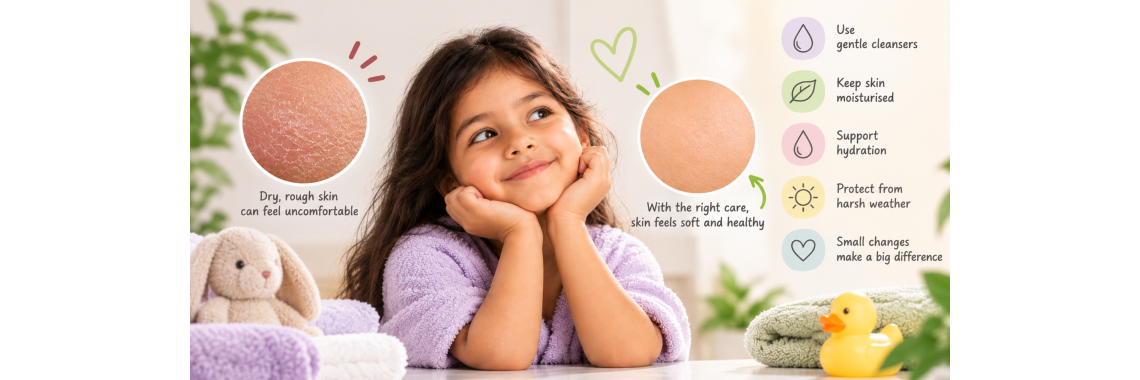
Dry skin in children is common, especially during weather changes, after frequent bathing, after swimming, or when a cleanser is too strong for everyday use. For many families, it shows up as rough elbows, dry knees, flaky legs, white patches after scratching, or skin that feels tight after bath time. The good news is that small routine changes often make a visible difference. The aim is not to create a complicated skincare routine for children. The aim is to protect the skin barrier, clean gently, moisturise consistently, and notice what makes the dryness better or worse.
Why children’s skin can feel dry
Children are active. They run, sweat, play outdoors, sit in air-conditioned classrooms, wear uniforms for long hours, and bathe frequently. Their skin may lose moisture when exposed to hot water, harsh soaps, strong fragrances, dust, dry air, or repeated rubbing with a towel. Sometimes dryness also appears because a child is not drinking enough water through the day, or because the weather has suddenly become cooler or less humid. Dry skin does not always mean there is a serious problem, but it is still worth caring for because uncomfortable skin can make children scratch, complain during dressing, or resist bath time.
Start with bath water
Hot water is one of the most common reasons skin feels tight after bathing. It may feel relaxing for adults, but it can remove natural oils from a child’s skin. Lukewarm water is usually a better choice. Keep baths simple and avoid long soaking sessions when the skin is already dry. If your child loves bath time, try making it playful without making it too long. A shorter bath with a gentle body wash is often kinder than a long bath with lots of foam and repeated scrubbing.
Choose a gentle cleanser
A cleanser should remove sweat, dirt and outdoor grime without leaving the skin squeaky, stretched or uncomfortable. When choosing a kids body wash, look for a mild formula made for regular use. Sulphate-free or gentle surfactant systems can be helpful for children who feel dry after ordinary soap. A rich lather is not the only sign of cleanliness. In fact, very strong foaming can sometimes be too much for delicate or dry-feeling skin. Teach children to wash the areas that collect sweat, such as underarms, neck, feet, knees and behind the ears, without rubbing the whole body aggressively.
Moisturise at the right time
The best time to apply lotion is soon after bathing, while the skin is clean and slightly damp. This helps the lotion spread easily and supports a soft, comfortable feel. Do not wait until the skin looks extremely dry. A small amount used daily can be more useful than a large amount used only after dryness becomes obvious. For school-age children, keep the routine predictable: bath, towel pat-dry, lotion, clean clothes. When the step is repeated every day, children stop seeing it as an extra task.
Use the right amount of lotion
Parents often wonder how much lotion is enough. The answer depends on the child’s skin and the weather, but the layer should feel comfortable, not sticky. Apply a little on arms, legs, elbows and knees first, then add more only where needed. Very dry areas may need extra attention. If the child dislikes the feel of lotion, try applying it in smaller sections and give it a minute to settle before dressing. A light but nourishing kids lotion can be easier for daily use than a very heavy product that the child refuses.
Clothing, towels and everyday friction
Dryness can become worse when skin is rubbed too much. Pat the skin dry instead of dragging the towel across it. Choose soft innerwear and avoid rough fabrics directly touching dry areas. During winter or dry weather, uniforms, socks and synthetic sportswear can increase friction. Applying lotion before dressing may reduce the dry, scratchy feeling. Also check whether laundry detergent, fabric softener, or strongly scented products are irritating your child’s skin. Sometimes the simplest change, like rinsing clothes well or using a milder detergent, helps.
Weather, swimming and school routines
Weather matters. In summer, sweat and frequent showers may disturb the skin. During monsoon, humidity changes and damp clothes can create discomfort. In winter, cooler air and hot baths often make dryness worse. Swimming can also leave skin feeling dry because pool water and repeated showering affect moisture. After swimming, rinse well with fresh water and use lotion. For school days, focus on a routine that can actually be followed. A child is more likely to cooperate when skincare is quick, comfortable and consistent.
When to ask a doctor
Most mild dryness can be supported with gentle care, but parents should seek professional advice if there is severe itching, bleeding, oozing, painful cracks, spreading rashes, repeated flare-ups, or if the child is losing sleep because of discomfort. A paediatrician or dermatologist can check whether there is eczema, allergy, infection, or another concern. Everyday moisturising can support comfort, but it should not replace medical care when the skin looks inflamed or the child is clearly distressed.
A simple routine parents can remember
Keep bath water lukewarm. Use a mild kids body wash. Avoid harsh scrubbing. Pat dry. Apply lotion soon after bath time. Dress the child in comfortable clothing. Repeat the same routine daily. Dry skin care does not need fancy steps. It needs gentle cleansing, timely moisturising and awareness of triggers. Over time, children also learn that caring for their skin is a normal part of hygiene, just like brushing teeth or combing hair.
Parent-friendly conclusion
Children’s care should feel gentle, consistent and realistic. Whether the topic is skin, hair, labels or hygiene habits, the best routine is one that parents can repeat and children can accept. Choose products thoughtfully, avoid unnecessary harshness, and keep the focus on comfort rather than perfection. Small everyday habits create the biggest long-term difference.
Daily care reminders
Keep the routine calm and positive. Children learn from repetition, so the same small steps matter more than occasional intense care. Store products in the same place, use only the required amount, rinse well, and notice how the child’s skin or hair feels after the routine. If something causes discomfort, stop using it and review the product, the amount, the water temperature and the way it is being applied. Parents do not need to chase every trend. A gentle, well-labelled and age-appropriate product used consistently is usually the most practical choice for everyday family life.
Comments
Write a comment